TipTraQ home kit
Using your TipTraQ kit
Your free baseline estimates body-clock timing from smartphone and wearable data. TipTraQ goes further — three nights at home to measure sleep apnea risk: breathing events, oxygen dips, and sleep staging. That pattern is a classic sign of body-clock desynchrony.
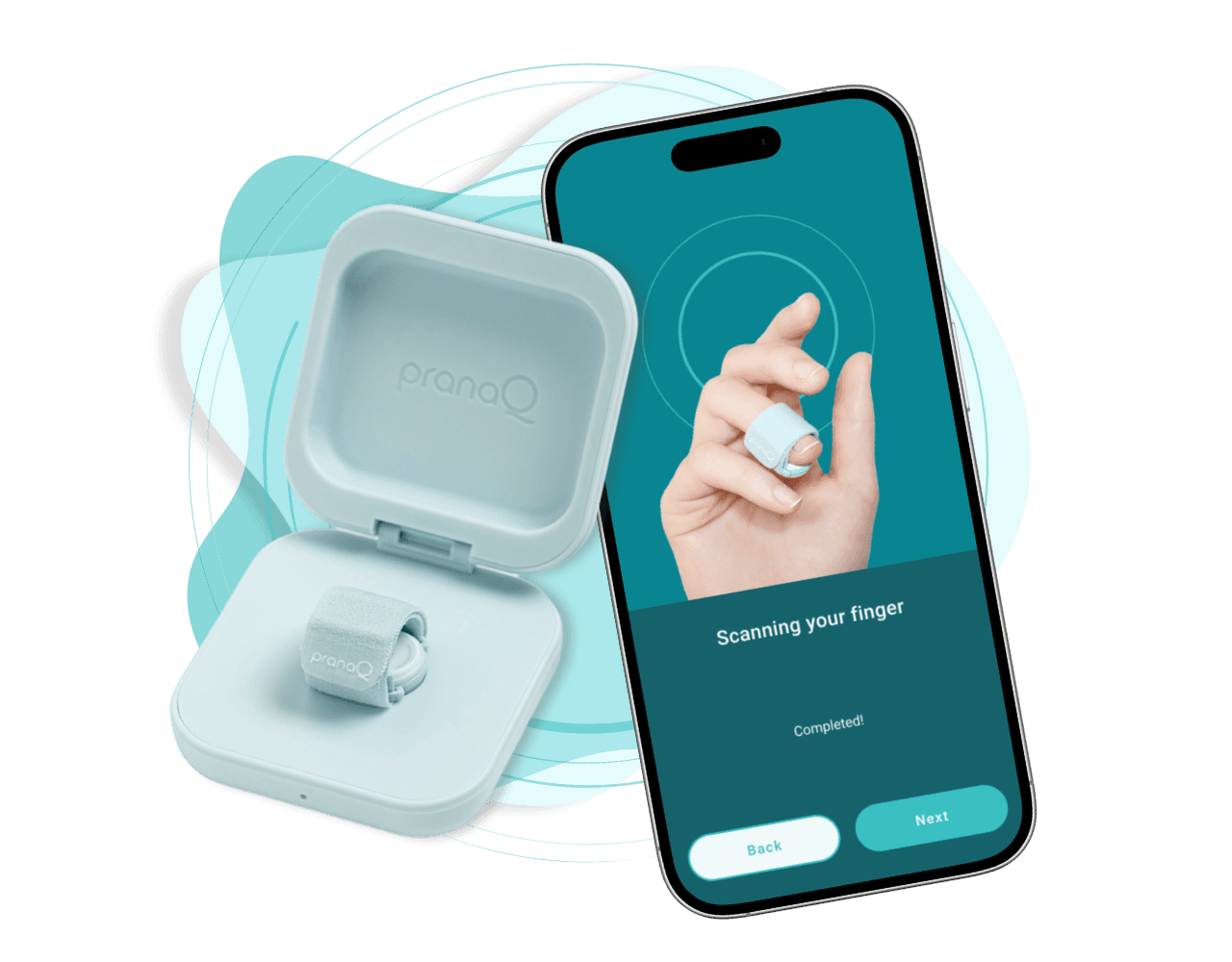
Charge the sensor
TipTraQ is a soft fabric finger sensor that lives in a small charging case. Top it up the night before — a full charge records several nights — then open the companion app.
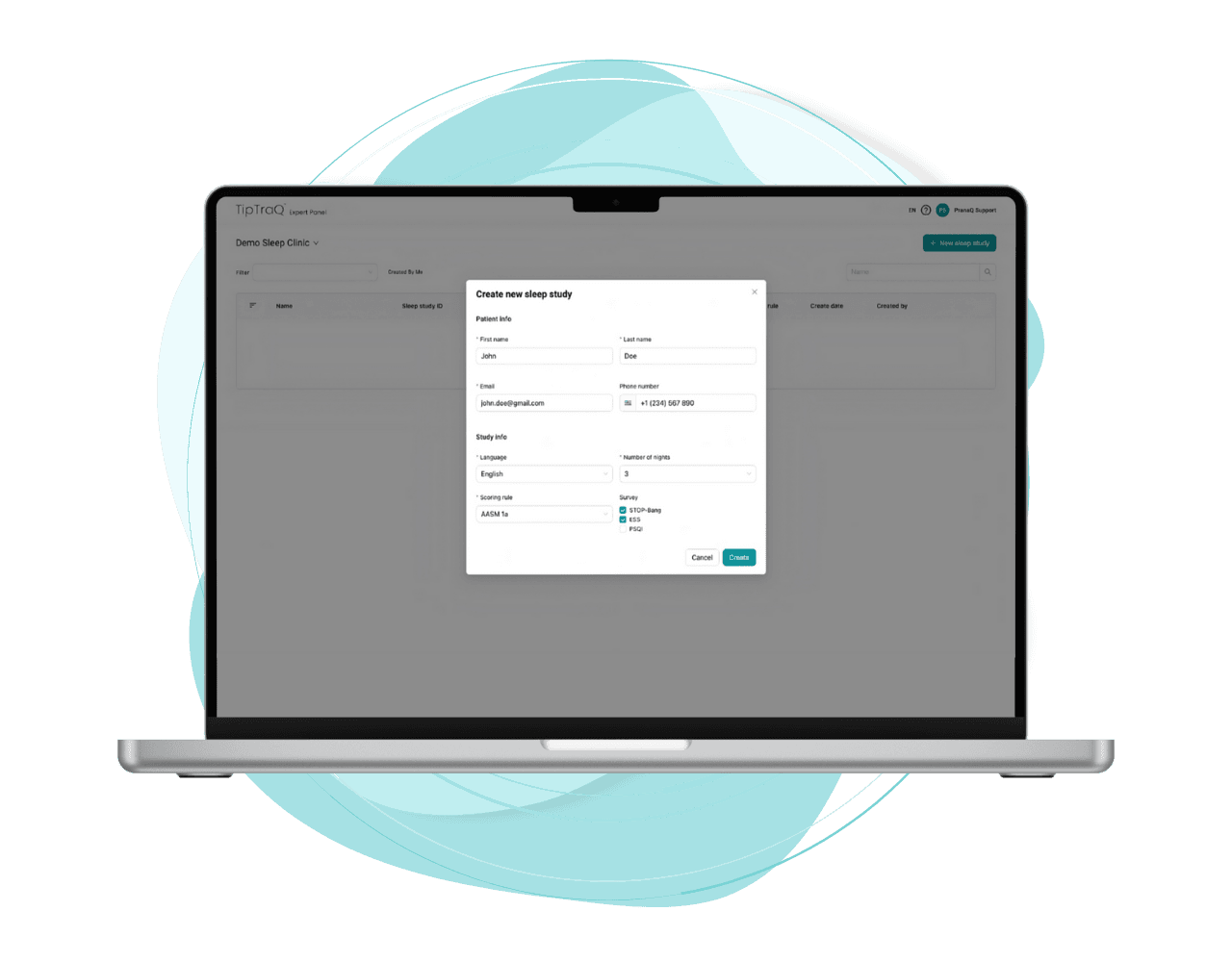
Set up the app
In the app, activate the test set up for you and complete the short sleep survey. The number of nights and scoring are already configured — you just confirm your details.
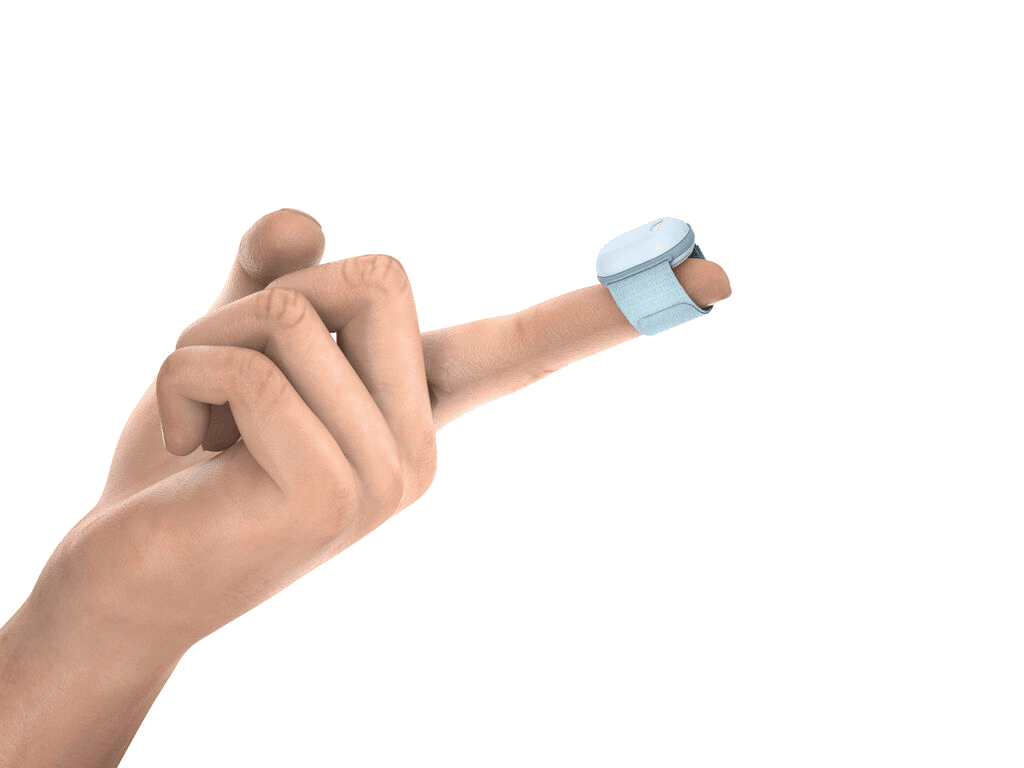
Wear it overnight
Wrap the soft sensor around your finger so it rests against the finger pad, start the recording, and sleep as you normally would.
- Snug but comfortable — the app confirms when the signal looks good.
- Keep the app running with your phone plugged in and face down.
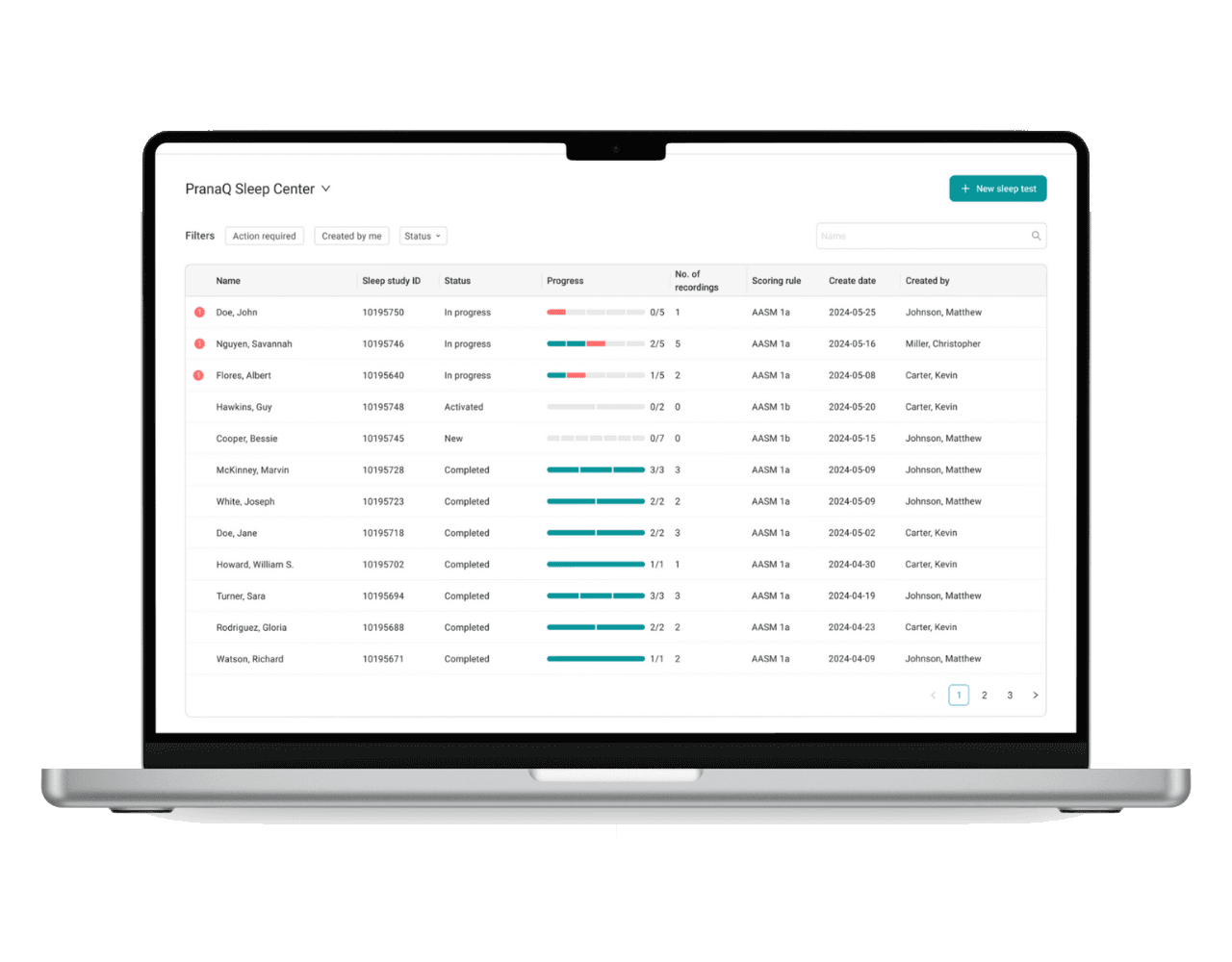
Your nights sync
Each morning, end the recording to upload the night. Your study progresses securely in the sleep centre — usually across three nights.
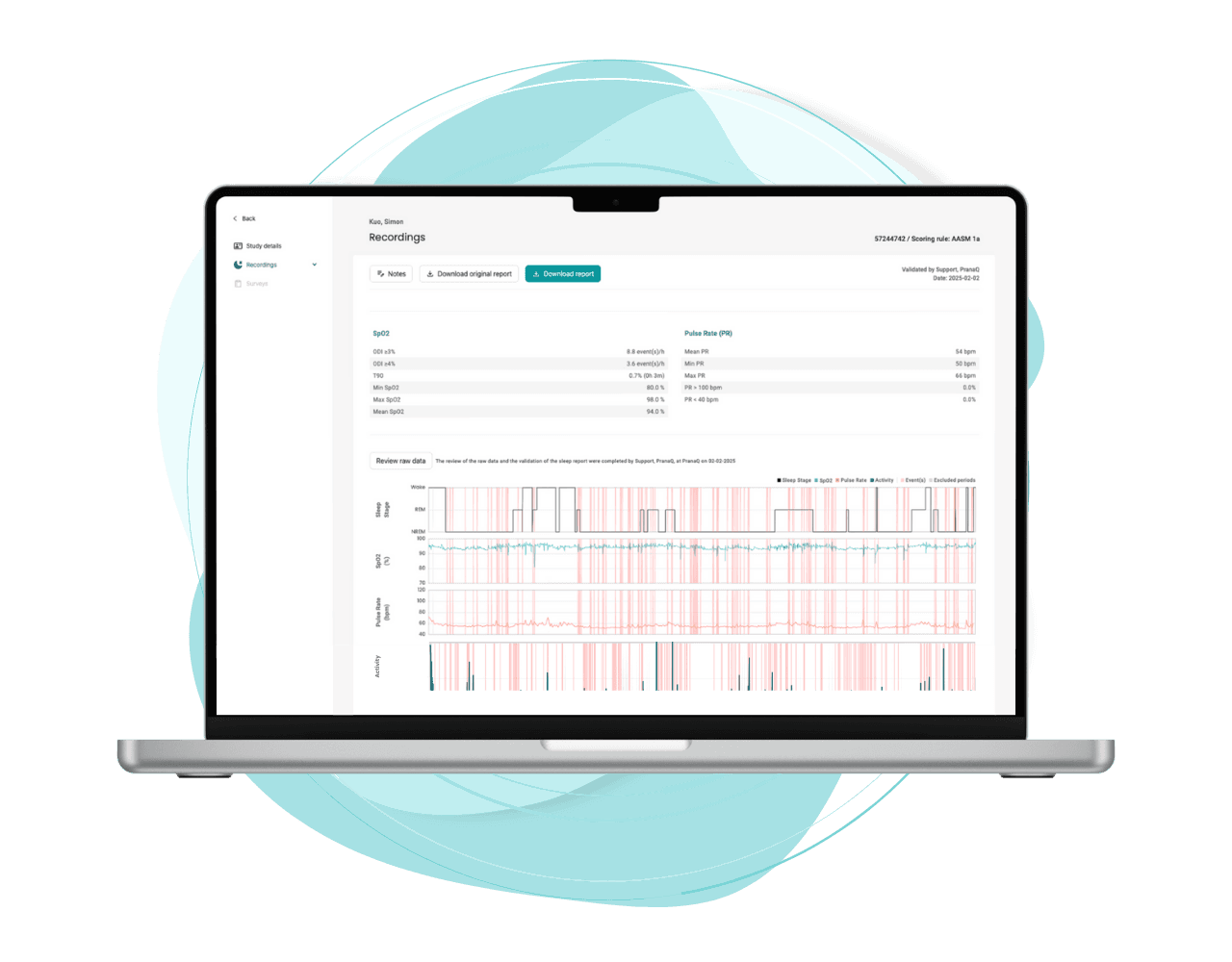
An expert reviews
A sleep professional validates each night — checking oxygen dips, breathing pauses, and sleep staging. This is clinical-grade signal for sleep apnea risk, not a smartphone estimate.
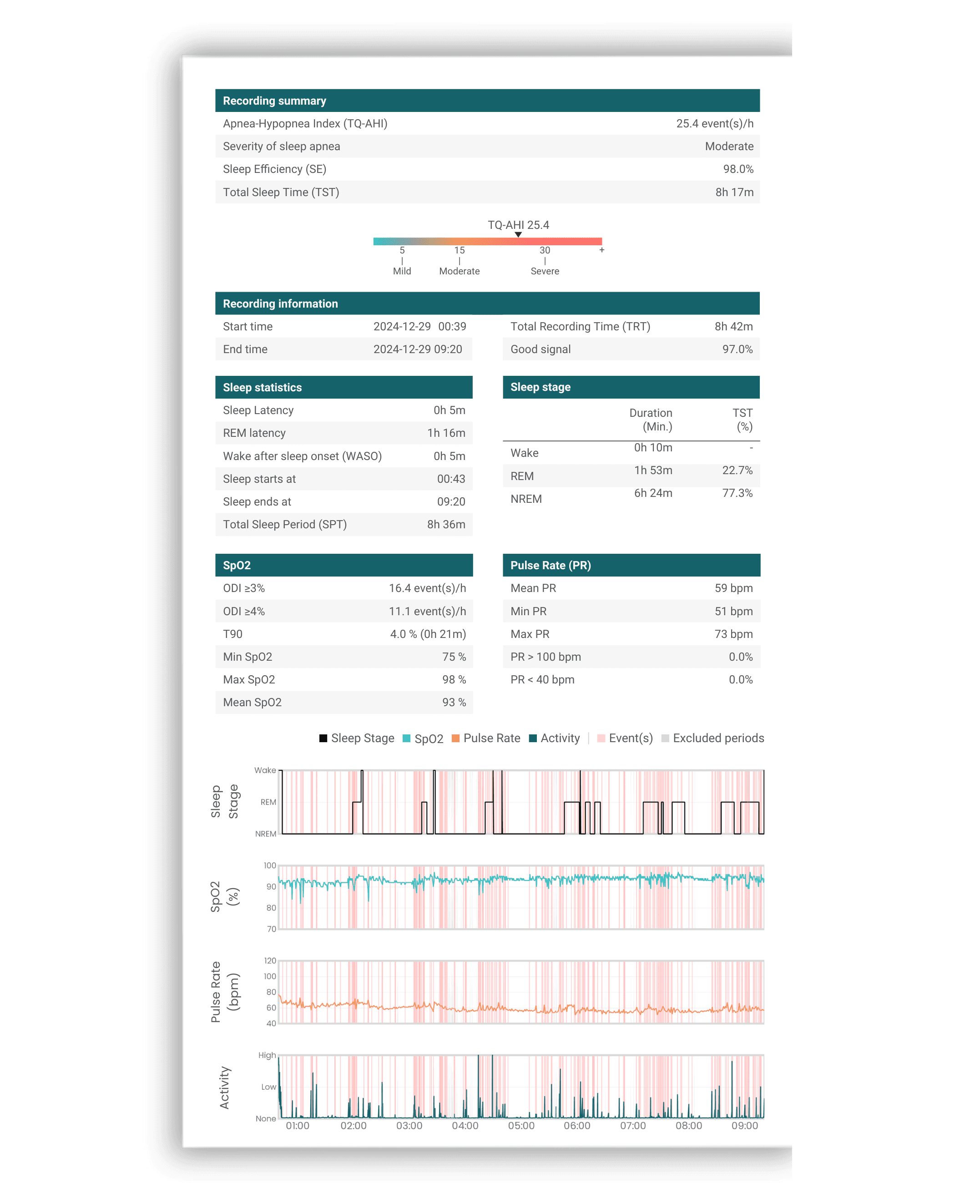
Your results
Your report shows sleep apnea severity (TQ-AHI), oxygen through the night, and sleep staging. Disrupted breathing is a classic sign of body-clock desynchrony — Deepdose adds this to your free baseline so your clinician can see the full picture.