Chronobiobank
Distributed intelligence, not a database
Half a million body clocks should not live in one warehouse. Chronobiobank learns how timing improves outcomes — without asking you to hand your most intimate biological data to an institution and hope for the best.
We’re not building a database. We’re building a distributed intelligence layer that learns from circadian clocks without centralising the data on any of them.
Capture on your device
Sleep, chronotype, medication timing, and outcomes stay patient-owned under row-level security. Feature extraction runs locally before anything is considered for learning.
Train without hoarding
A federated coordinator merges encrypted contributions — weight deltas or differentially private summaries — into global timing models. Model weights never surface in the patient app.
Insight enterprises can license
Pseudonymised outcome records, cohort aggregates, and audited access logs — what ICBs, pharma, and academics buy. Not raw sleep traces. Not individual gradients.
Why nowWhen institutional trust is tested
UK Biobank asked half a million people to trust an institution with their most intimate biological data. That trust has been tested. We’re building something different — where the data never leaves you.
The asset moves to the institution
Participants contribute samples and records to a warehouse model. Research scales — but so does the trust surface every time access rules, commercial reuse, or data partnerships come under scrutiny.
The asset stays on your edge
Raw sleep and timing data remain patient-owned. Federated learning and privacy-preserving summaries improve models without centralising the intimate trace. Licensed research sees pseudonymised outcomes — not your nights.
A generation primed by Cambridge Analytica and NHS data-sale rows does not need another citizen-science biobank that quietly ships the asset to a server. Chronobiobank is research infrastructure built for people who want population insight without surrendering personal biology.
Privacy as architectureWhat Apple proved — and what it costs
Apple made on-device federated learning a competitive advantage, not a compliance checkbox. The model trains locally; only learned weight updates aggregate centrally. Your photos, typing patterns, and health metrics never leave the phone.
Apple’s servers do not process your intimate traces — compute is distributed across a billion devices they do not pay to run. A traditional biobank pulls every sleep log to a central server, cleans it, stores it, and queries it. Participant count scales storage and compute brutally.
Body-clock state on the edge
Deepdose computes BTI, proxy DLMO, and dosing windows on the participant’s phone or wearable path — not in a central warehouse.
Population patterns from model updates
Chronotype and timing–outcome relationships are learned by aggregating federated weight deltas or privacy-preserving summaries — not raw longitudinal sleep JSON.
Researchers query the model
Licensed partners interrogate population-level inference and pseudonymised outcome aggregates — not a queryable lake of individual nights.
Central infra is coordination
The Chronobiobank runs consent governance, secure aggregation, and audit — not petabyte storage and batch ETL on intimate biology.
A federated chronotype model must learn phase relationships over weeks and months, not single timepoints. That is a genuinely novel research problem — publishable, partnerable, and potentially patentable: a population chronotype inference model that improves with scale without centralising intimate traces.
Participants can see what lives on their device and delete it. Consent stops being abstract policy and becomes something tangible.
HybridEvery participant, every device
Hybrid Tier B/C paths exist because polypharmacy cohorts skew older and less connected — federated where capable, privacy-preserving upload elsewhere. Designed from day one, not bolted on later.
- Tier A
Federated
Modern phone · Oura / Whoop · reliable Wi‑Fi
On-device training in the background. Only encrypted weight updates leave the phone — never raw sleep JSON.
Leaves the edgeGradient contribution per learning round
- Tier B
Privacy upload
Older smartphone · patchy charging · intermittent sync
When federated training isn’t viable, we queue minimum sufficient statistics — phase features, timing shift, outcome label — with differential-privacy noise before upload.
Leaves the edgeDP-noised feature bundle when online
- Tier C
Assisted
Care home · carer proxy · questionnaire-only
Human-mediated entry still improves population models. Pseudonymised prescribing outcomes join the same coordinator as federated rounds — via coarse bands, never names.
Leaves the edgePseudonymised outcome record only
PrecedentTechnical precedent
Apple HealthKit + Core ML
On-device health metrics with local inference — the consumer proof that federated health learning works at scale.
Federated cohort learning
Google’s FLoC was abandoned for ads, but secure population-level inference without centralised behavioural lakes survived in the research stack.
OpenMined / PySyft
Open-source privacy-preserving ML infrastructure built for health research — production-grade federated training and secure aggregation.
HDRUK Trusted Research Environments
Not fully federated yet — but the UK’s national move toward governed research access without shipping raw NHS data to every analyst.
Data planeCapture · store · retrieve
Sleep & phase
Sleep onset, wake, deep/REM duration, proxy DLMO, social jet lag, and circadian score — from wearables, phone, or TipTraQ validation.
Medication context
Medication code, prior vs recommended timing, adherence proxy, and whether the clinician accepted or modified the window.
Outcomes
Blood pressure, HbA1c, symptom scores, and adverse events — linked to timing shifts when patients and clinicians record them.
Patient clinical store
Raw sleep logs, DLMO estimates, and prescribing data — Supabase RLS; readable only by the patient and consented clinicians.
Learning coordinator
Round metadata, aggregated contributions, and global model versions — internal only; no patient_id; never licensed to third parties.
Chronobiobank licensing store
Pseudonymised outcome rows and population aggregates — readable only under active data license with full audit trail.
Patient app
GetsBTI payload, dosing windows, own clinical data
NeverGlobal model weights or other participants’ data
Clinician triage
GetsPatient BTI, device sync status, recommendation history
NeverChronobiobank aggregates or training internals
Learning coordinator
GetsAggregated contributions per round
NeverIndividual gradients before secure aggregation
Enterprise licensee
GetsFiltered pseudonymised records and cohort statistics
NeverRaw sleep, re-identification bridge, or model checkpoints
LearnFederated learning loop
Version one trains a small timing–outcome model across chronotype band, social jet lag, timing shift minutes, medication cluster, and adherence. Capable devices train locally; the coordinator merges; the BTI engine deploys a new model version tag. Patients still see only plain-language window guidance.
- NowConsent-gated pseudonymised outcome ingest and enterprise licensing
- NextCapability routing and anonymous BTI telemetry
- ThenPrivacy upload path for intermittent devices
- ScaleOn-device federated rounds for timing–outcome v1
ConsentConsent you control
Clinical care
Share BTI and device status with your linked clinician. Required for prescribing workflows.
Model improvement
Help train privacy-preserving timing models. Raw sleep never leaves Tier A devices; withdraw any time.
Research licensing
Contribute pseudonymised outcomes to NHS population analytics, pharma R&D, or academic studies — each purpose is explicit.
UK GDPR-shaped workflows · immutable consent audit log · Chronobiobank isolation: UI never exposes model weights.
Consent framework ↗LondonWho gets this off the ground
Deepdose is the working prototype — patient app, wearable ingest, BTI engine, consent-gated Chronobiobank ingest, and enterprise licensing dashboard. The partners below are the credible London stack to scale federated rounds, not claimed relationships.
OpenMined / PySyft
UK-rooted privacy-preserving ML. Natural technical partner for secure aggregation, differential privacy, and federated coordinator implementation.
HDRUK
National health-data research governance and Trusted Research Environment direction. Bridge from federated learning to NHS-trustable population research.
Academic validation
Oxford Sleep & Circadian Neuroscience (Foster), Roenneberg chronotype methods, and London chronotherapy groups — credibility for longitudinal phase modelling and trial design.
London ICB + NIHR
An Integrated Care Board pilot for polypharmacy timing in older adults; NIHR or digital-health infrastructure grants for federated evaluation — the path from prototype to governed cohort.
The prototype is DeepDose
Wearable pull-sync, proxy DLMO fusion, clinician triage, pseudonymised Chronobiobank ingest, and licensed enterprise analytics already ship in the codebase. Federated rounds are the next layer on architecture that is live today.
Your clock stays yours
Start free with phone and wearable data. Choose what to share. Tier A, B, or C — we route you to the path your device can support.
Licensed population insight
Filter by age band, chronotype, medication, and consent purpose. Pseudonymised tokens only — full access audit trail.
A new category of infrastructure
AI safety, privacy tech, and digital-health infrastructure grants — fundable as distributed intelligence, not another central biobank replay. Apple’s on-device health playbook applied to chronotherapy.
EvidenceResearch
Your body runs on a clock. Take a medicine, eat, or sleep at the wrong point in that clock and the same dose does less, harms more, and — repeated night after night — costs healthy years of life.
21–34% ↑
higher risk of death with bright nights
£100s of millions
avoidable medicines harm each year
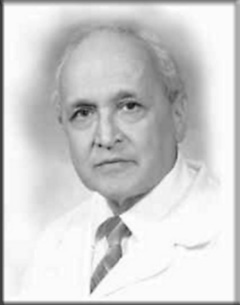
Built on Halberg
Franz Halberg founded chronobiology decades ago. Today’s researchers keep proving him right.
 Chronobiology
Prof. Franz Halberg
Founded chronobiology and coined the word "circadian" in 1959. He showed that body rhythms decide health or disease, and that medicines work better when timed to them. Everything below proves him right.
 Chronobiology
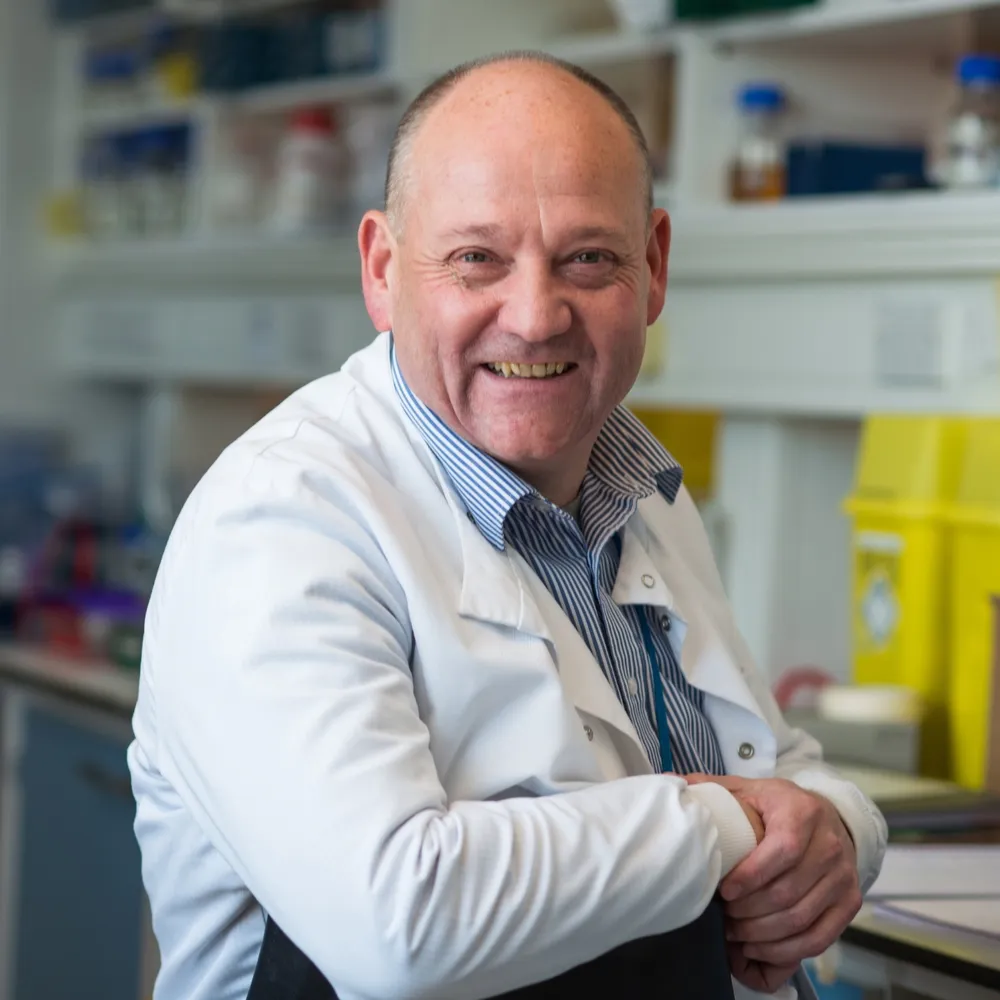
Prof. Russell Foster
Maps the light pathways that set the body clock Halberg described, and why the timing of a dose changes its effect.
 Chronobiology
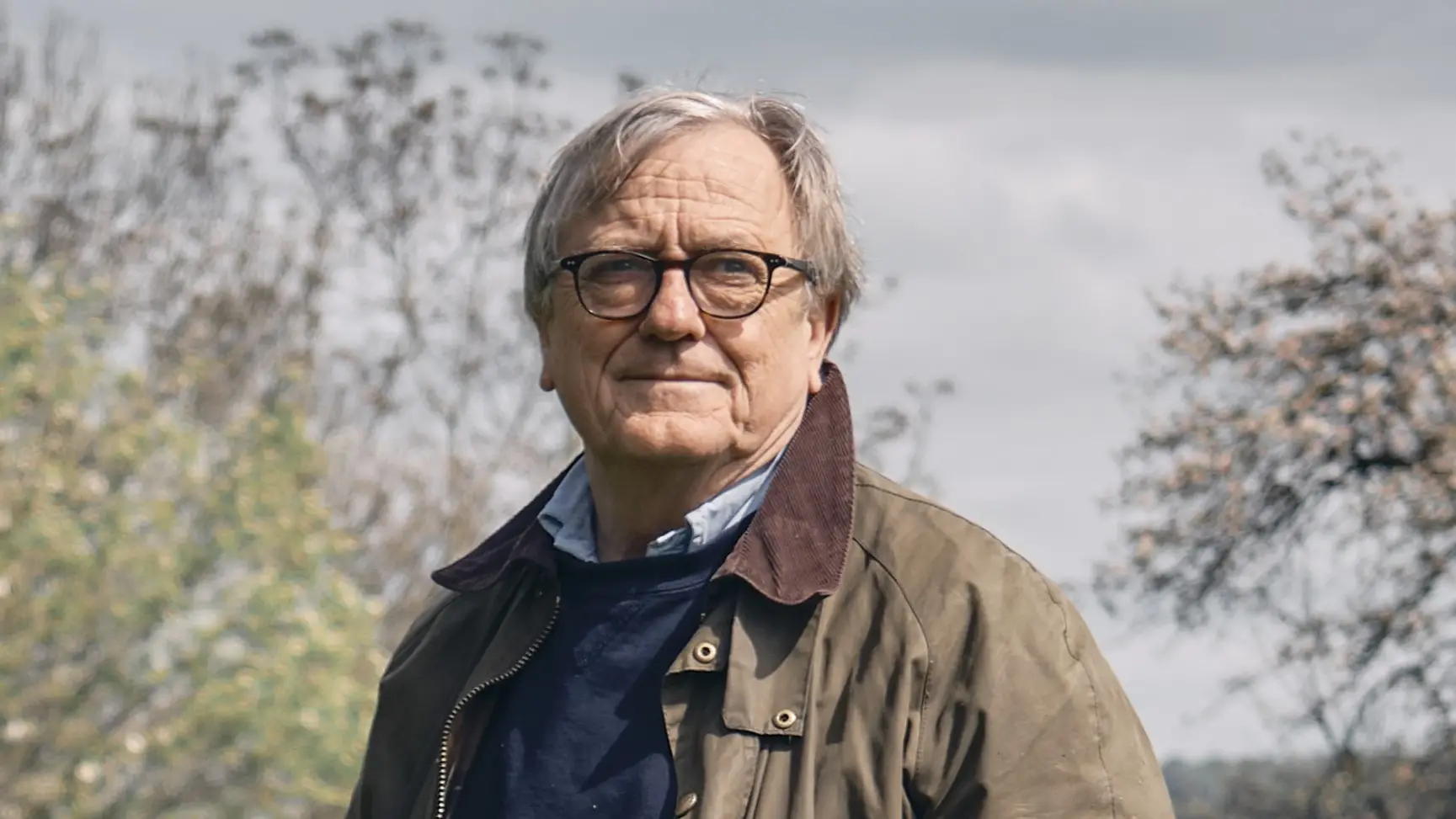
Prof. Till Roenneberg
Measures each person’s body-clock type at population scale, putting numbers to the individual timing Halberg called for.
Key papers
Three evidence clusters — foundational science, drug timing, and population scale.
Foundational
Body clocks and chronobiology — the science precision timing is built on.
Drug-specific
Same drug, different hour — when the dose lands changes what it does.
Population
Real-world body clocks at scale — why one schedule fails whole groups.
You choose what data we can use. Consent first · UK GDPR · Your clinician stays in the loop.
Start free →